최종편집 : 2026.10.19 월 17:57
  All
All Campus News


 Jeong Ha-yeon
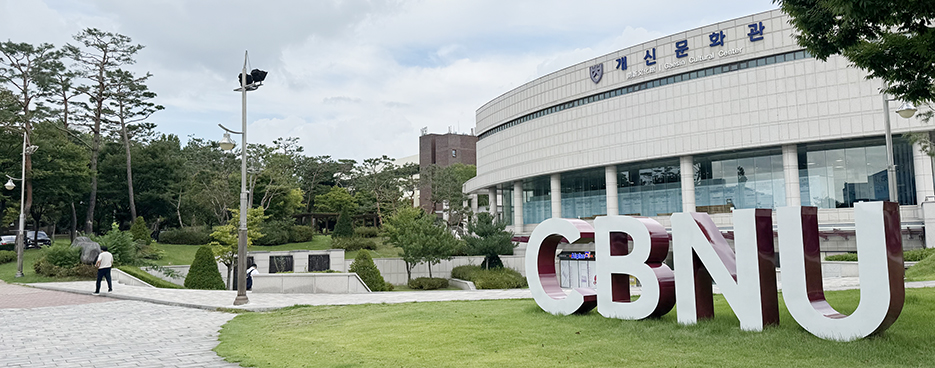
The merger discussions with Korea National University of Transportation (KNUT), initiated under the Glocal University 30 project, began as a pivotal project signaling a shift in local higher education, going far beyond a simple merger. On May 8, following the completion of the University Council’s review at CBNU, the official application for the integration was submitted to the Ministry of Education, making the merger appear to be progressing smoothly. However, as the universities failed to retain their Glocal University 30 designation, the future of the integration was cast into uncertainty.
[May 28 ~ June 13] Submission of the Revised Integration Application
On May 28, the Ministry of Education requested supplementary details regarding the submitted proposal, including minutes and copies of KNUT’s ex-post council meetings, as well as verification of the consistency between the main application and its attachments. Following the approval of the original bill by the University Council of KNUT on June 8, both universities finalized and submitted the revised application incorporating all requirements on June 13, leaving only the Ministry of Education’s approval process ahead. However, the fate of the two universities was significantly altered by the outcome of the Glocal University 30 Joint Evaluation held from June 11 to 12.
[June 30 ~ July 10] Glocal University 30 Joint Evaluation Grade D and Resignation of Acting President
On June 30, the Ministry of Education announced the results of the Glocal University 30 Joint Evaluation, assigning CBNU and KNUT the lowest grade “D” due to insufficient progress and delays in the Glocal University 30 project and integration. Having received a Grade D for two consecutive years, both universities faced the risk of the revocation of Glocal University 30 project designation, loss of funding, and being required to return previously distributed grants. In response, CBNU convened an emergency academic council meeting that afternoon. The following day, on July 1, Acting president Park Yu-sik, professor of the School of Business at CBNU, announced his resignation, taking full responsibility. While both universities submitted an appeal on July 9 contesting the outcome, the National Research Foundation of Korea rejected it on July 16.
[July 10] Unilateral Presidential Election
Internal divisions deepened amidst these challenges, centered around the “unilateral presidential election” pursued by CBNU’s Presidential Recommendation Committee. On Feb. 9, 2026, at the joint Merger Promotion Delegation conference, both universities have agreed to hold a joint election for the first president of the merged university following approval from the Ministry of Education, a principle previously ratified by member votes at both institutions. However, following former President Koh Chang-seop’s resignation, the newly formed committee sought to hold a unilateral election for CBNU, citing a leadership vacancy. This move sparked concerns among university members that an unilateral election prior to the launch of the merged university violated the intent of the integration and would exacerbate inter-university conflict. Nevertheless, the committee proceeded with the 23rd presidential candidate selection vote on July 10. In the runoff election, professor Goo Young-wan from the Dept. of Economics secured first place with 66.38% of the vote, while professor Lim Dal-ho of the Dept. of International Business took second place with 33.62%. The official appointment remains subject to the Ministry of Education verification, recommendation, and presidential appointment, with no final confirmation publicly disclosed to date.
[July 16 ~ July 31] Final Collapse of Glocal University 30 Project
On July 22, the Ministry of Education sent a prior notice of the revocation of the Glocal University 30 designation to both universities. At the same time, the ministry required them to submit supplementary documents for the university integration application by July 31, including details of their financial plans and feedback from university members. However, both universities judged that it would be difficult to finalize financial plans and collect opinions from their members within the limited time, and ultimately chose not to submit the required supplementary documents by the deadline. The failure to meet the deadline brought changes to the merger effort. Consequently, completing the ministry’s review and approval within the time required to meet the admissions schedule became impossible. As a result, the initial plan to launch a fully unified university in March 2027 effectively collapsed.
[Aug. 3 and After] Announcement of a Phased Integration Plan
On Aug. 3, 2026, Yu Jae-soo, acting president of CBNU and professor of the School of Information and Communication Engineering, held a press conference to officially announce a phased integration plan. Under this plan, administrative integration will take place in March 2027, followed by academic integration in March 2028. Benchmarking the prior administrative-first, academic-later integration model of Gyeongsang National University, the strategy aims to complete administrative unification first and then uses a one-year buffer period to adjust academic structures and reconcile conflict among university members. On the following day, both universities officially submitted the revised timeline incorporating the phased integration approach to the Ministry of Education. On Aug. 7, both reconfigured the Joint Merger Promotion Delegation, assigning four senior officials from each university for a total of eight members, to complete the stalled supplementary work on the integration application. At its first meeting on Aug. 10, the delegation was tasked with negotiating key contentious issues during the application revision process and building a consensus framework to gather member opinions. Scheduled for later in Aug. are briefings for university members regarding the application revisions, an opinion-gathering vote on the merger, and deliberations by the Academic Council and the University Council, aiming to submit the final application in mid-Sept.
The core challenge facing the merger lies in securing the necessary financial resources following the revocation of the Glocal University 30 designation. As the original integration plan was established on the premise of financial support from the Glocal University 30 project, the loss of future national funding and the potential clawback of previously distributed project grants pose significant financial risks to the merger process. Even with a phased integration, restructuring human resources, organizational frameworks, information systems, campus operating systems, and academic structures will entail substantial financial burdens. Consequently, if both universities fail to establish concrete and feasible funding plans encompassing national, local, and institutional resources, the feasibility and sustainability of the integration effort could be severely compromised.
By Jeong Ha-yeon
hayeon0330@chungbuk.ac.kr


 Quick News