최종편집 : 2026.10.19 월 17:57
  All
All Campus News


 Kim Ye-kyeong&Jeong Ha-yeon
At 7:10 p.m. on May 28, a 500 mL reagent bottle containing toxic bromine broke in a laboratory at CBNU’s Advanced Bio Research Center, resulting in the release of bromine gas. Immediately after the accident, the laboratory was ventilated, laboratory personnel evacuated, and the proper authorities, including the fire department, took control of the site. Safety measures were completed about 1 hour and 30 minutes later. Although the accident occurred in a university laboratory, Cheongju sent an emergency disaster text message as a precaution and advised people to avoid the area around the Advanced Bio Research Center.
The accident raises questions about the vulnerability of safety management in university laboratories. According to the laboratory accident prevention measures recently posted on the website of CBNU Head, Safety Management, the measures include the use and verification of Material Safety Data Sheets and the implementation of regular safety education. However, there is limited information on whether laboratory personnel had completed the safety education and how the training content was applied in the field. University laboratories are shared spaces used by professors, researchers, graduate students, and undergraduates. Since laboratory safety cannot be guaranteed by individual proficiency alone, systematic safety education should be a starting point for ensuring safety in the laboratory.
Training is provided in accordance with Article 20 of the Laboratory Safety Environment Law to prevent and respond to accidents that may occur during experiments, practical training, and research and development. According to CBNU’s 2026 detailed implementation plan for laboratory safety management, the training program consists of regular education and training, education and training for new employees, special safety education, and training requested by colleges and institutions. Research workers in the fields of science and technology are required to complete at least 6 hours of online regular training every 6 months. Newly hired research workers must complete at least 8 hours of training and those newly participating in research and development activities, including undergraduate and graduate students, are required to complete at least 2 hours. Special safety education is also provided for 2 hours when a serious laboratory accident occurs or when research activities are changed. According to Won Gwang-hee at CBNU Head, Safety Management, the special safety training was conducted on June 5 for research workers in the College of Agriculture, Life & Environment Sciences after the accident on May 28.
On the other hand, the question is whether the safety education is being properly completed and whether it is effective in practice. Won stated that there is no separate system of restrictions for those who have not completed the training. However, interviews with students revealed differences among departments in their guidelines and measures, and most departments have generally made completion of education mandatory. Bae Yeong-jun (Dept. of Wood and Paper Science, 24) said, “Students who have not completed the training are called in separately and receive a warning and additional training. Also, there are some course restrictions.” Koh Ga-ryoung (Dept. of Pharmacy, 23) said, “Submitting a completion certificate is mandatory to get credit for a laboratory course. If the certificate is not submitted, it is difficult to receive credit even if students participated in all course requirements, including experiments, reports, and exams.” The issue is the efficacy of online education. Koh said, “Rather than paying attention to the training content while the video is playing, students tend to focus only on the information needed to solve the quiz. Even without paying attention to the training, students can receive a completion certificate just by leaving the video playing.” Bae said, “Although there are systems to prevent students from skipping videos, online training is often a formality.” He suggested, “Offline training should also be provided to cover potential hazards in actual research environments and allow students to directly practice the proper use of protective gear, handling chemicals, and emergency evacuation.”
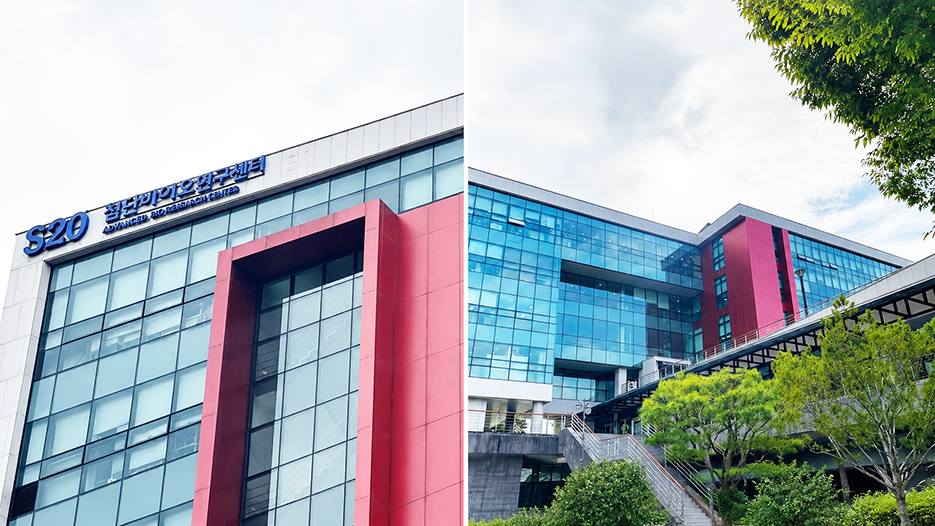
▲ Advanced Bio Research Center.
By Kim Ye-kyeong | ykk623315@chungbuk.ac.kr
By Jeong Ha-yeon | hayeon0330@chungbuk.ac.kr


 Quick News