최종편집 : 2026.09.07 월 19:58
  All
All Experience


 Kim Seo-yeon

Following the box office success of the film The King’s Warden, public interest in King Danjong, the tragic king of the Joseon Dynasty, has once again risen. Surpassing 10 million viewers within just a month of its release, the film has drawn significant attention by portraying the life of King Danjong—a king who was deposed at a young age and died in exile.
This renewed interest has naturally led visitors to Yeongwol in Gangwon State, where traces of Danjong’s life remain. Going beyond the story depicted in the film, CBT reporters visited Yeongwol to encounter firsthand the historical sites where King Danjong once stayed.
Yeongwol, Where the Spirit of King Danjong Lives On
Located in the southern part of Gangwon State, Yeongwol is a county with a population of around 36,000. It preserves historical traces of King Danjong’s exile and death throughout the area. Although not large, the city is considered historically significant due to the concentration of sites associated with King Danjong.
The CBT reporters visited the major sites where visitors can trace King Danjong’s life and final moments. Starting with Cheongnyeongpo Meandering Stream(Cheongnyeongpo), where he lived in exile, Jangneung Royal Tomb, the site of his tomb and Gwanpungheon Hall, said to be the place where he spent his final days.
These sites are located close to one another, making it relatively easy for visitors even without a car to get around. It took about 7 minutes by taxi from Yeongwol Station to Cheongnyeongpo, and about 3 minutes from Cheongnyeongpo to Jangneung Royal Tomb. Gwanpungheon Hall is situated in the center of downtown Yeongwol, within easy walking distance.
An Isolated Space: King Danjong’s Time at Cheongnyeongpo
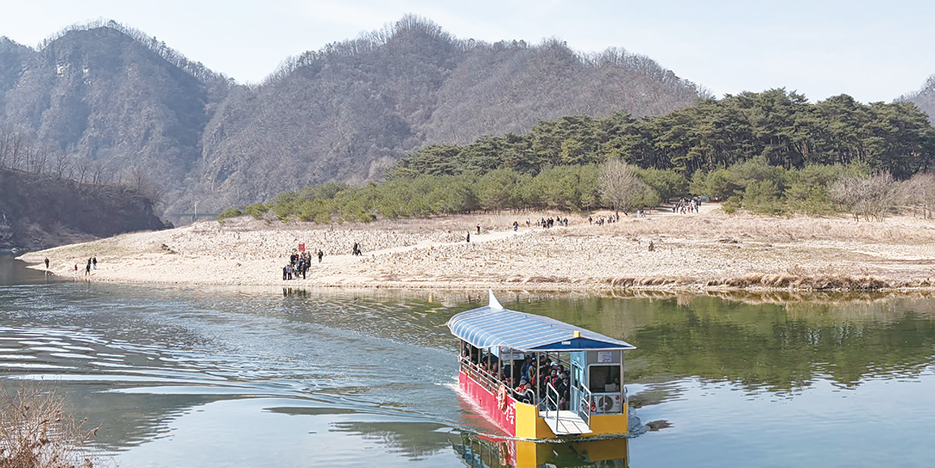
Cheongnyeongpo Meandering Stream, where King Danjong spent his exile, is one of the most symbolic sites in Yeongwol. Located in Nam-myeon Yeongwol-gun, this historic site lies along the upper reaches of the Namhan River and was designated as State-Designated Scenic Spot No. 50 in 2008. Surrounded on three sides by the river and blocked on the remaining side by a steep rock cliff known as Yukyukbong, it forms an island-like terrain that is difficult to access without a boat.
King Danjong, the sixth king of the Joseon Dynasty, was exiled to Cheongnyeongpo in 1457 after being dethroned by his uncle, Prince Suyang. Forced to give up the throne at the age of 13, he spent his days in isolation, cut off from the outside world. Historical accounts suggest that there was a residence here at the time, where he is believed to have lived during his exile.
To enter Cheongnyeongpo, visitors must purchase a boat ticket at the dock. The fare is relatively affordable: 3,000 KRW for adults, 2,500 KRW for teenagers and military personnel, 2,000 KRW for children, and 1,000 KRW for seniors. After a short boat ride of just one or two minutes, visitors arrive at the site.
Seen in person, Cheongnyeongpo presents a picturesque landscape, with a clear river flowing in front and towering mountains rising behind, forming a classic harmony of nature. While the scenery initially captures reporters’ attention, the enclosed atmosphere created by the surrounding water and dense pine forest soon becomes more striking. Gwaneumsong Pine Tree, standing among the pines, is a symbolic tree associated with stories from Danjong’s exile. It evokes a sense of sharing the same time and space as the young king. Reflecting on the days he must have endured there; the reporters can almost feel the profound isolation and deep sense of loss he experienced.
Perhaps because the visit took place early in the morning, the overall atmosphere of Cheongnyeongpo was calm and quiet. However, upon leaving, a long line formed at the dock, with visitors waiting over 30 minutes. It was a scene that underscored the popularity of the film The King’s Warden. Rather than rushing through, many visitors moved slowly, taking in the space at their own pace.
Following the Final Days of King Danjong: Jangneung Royal Tomb and Gwanpungheon Hall
After passing through Cheongnyeongpo, the next destination was Jangneung Royal Tomb, where King Danjong was laid to rest. If his years in exile were marked by isolation and endurance, Jangneung Royal Tumb felt like a place where all those years had quietly settled. As the only Royal Tomb of Joseon Dynasty located outside Seoul, Jangneung Royal Tomb holds significant historical importance, having been designated as a UNESCO World Heritage Site and Historic Site No. 196.
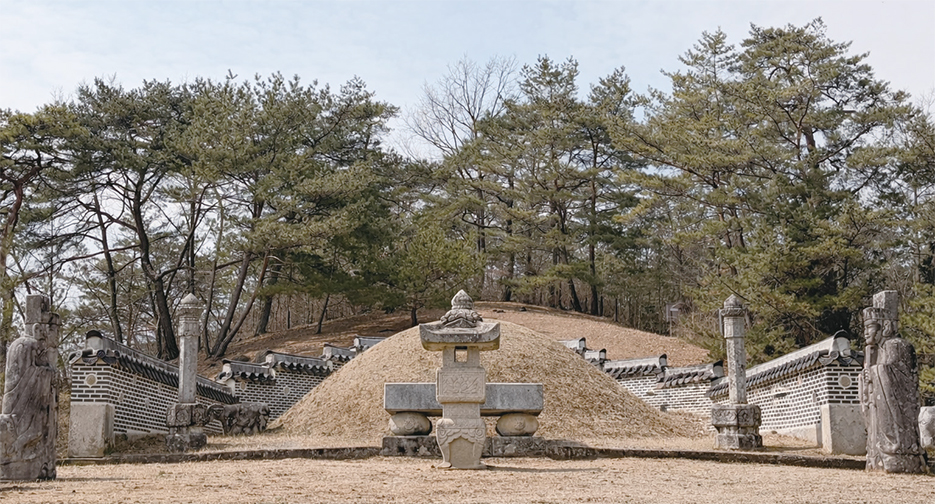
Entering along a path lined with dense pine trees, the tomb complex conveyed a sense of restraint rather than grandeur. Yet it was precisely this quiet simplicity that left a deeper and more lasting impression.
Within the grounds, the burial mound of King Danjong sits atop a hill, surrounded by facilities such as the Danjong History Hall, where visitors can learn about his life, as well as spaces dedicated to memorial tablets honoring loyal subjects. In particular, the forest paths around the tomb are well maintained, allowing visitors not only to observe the site but also to reflect on it while walking at a slow pace. Admission is 2,000 KRW for adults, and visiting hours run from 9 a.m. to 6 p.m.. On April 25, when the Yeongwol Danjong Cultural Heritage is held, admission is free.
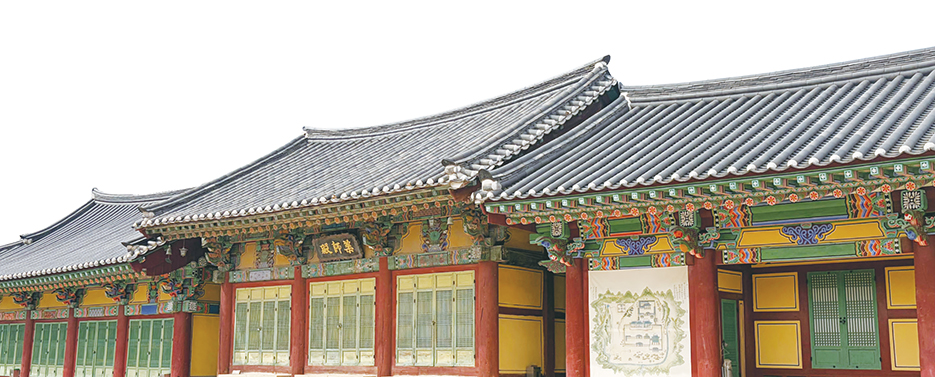
After his exile in Cheongnyeongpo, King Danjong is believed to have been moved due to flooding to Gwanpungheon Hall, an official guesthouse at the Yeongwol-bu Government Office, where he spent his final days and was forced to drink poison in 1457. Today, the site sits quietly in the center of town and appears modest at first glance. However, once visitors realize that it was the place where a king met his end, the space takes on a heavy, almost palpable sense of history, and its otherwise ordinary surroundings begin to feel deeply significant.
History Encountered in Yeongwol, and Beyond
The various places visited in Yeongwol were more than just tourist destinations; they felt like spaces where history and the present continue to coexist. While the journey began with the film’s success, walking through these places and encountering the traces of King Danjong firsthand left a far deeper impression than simply watching a story unfold.
For those who developed an interest in King Danjong and his era through the film, visiting Yeongwol and following his traces in person can be a meaningful experience. Experiencing these spaces directly allows for a deeper understanding that goes beyond passive observation.
In particular, the Yeongwol Danjong Cultural Heritage, which will be held over three days from April 24 to 26, is expected to offer an opportunity to engage more closely with this historical legacy. Yeongwol ultimately revealed itself as a place where the past can be encountered once again within the present.
By Kim Seo-yeon | ssung@chungbuk.ac.kr
By Kim Jun-woo | acamos777@chungbuk.ac.kr


 Quick News