최종편집 : 2026.09.07 월 19:58
  All
All Experience


 Choi Yun-ji
A drop of water, born from the scars of war, has become one of the symbolic images of Korean contemporary art. This whole journey is brought together in one place at the National Museum of Modern and Contemporary Art (MMCA), Korea, Seoul, which is presenting this fall the first large-scale retrospective Kim Tschang-yeul since the artist’s passing. The exhibition runs until Dec. 21 in MMCA Seoul B1, Gallery 6 and 7, and 2F, Gallery 8.
Kim Tschang-yeul was an abstract painter who lived through Korea’s modern history, its liberation, division, and war with his whole body, and he is now regarded as one of the representative artists of Korean contemporary art.
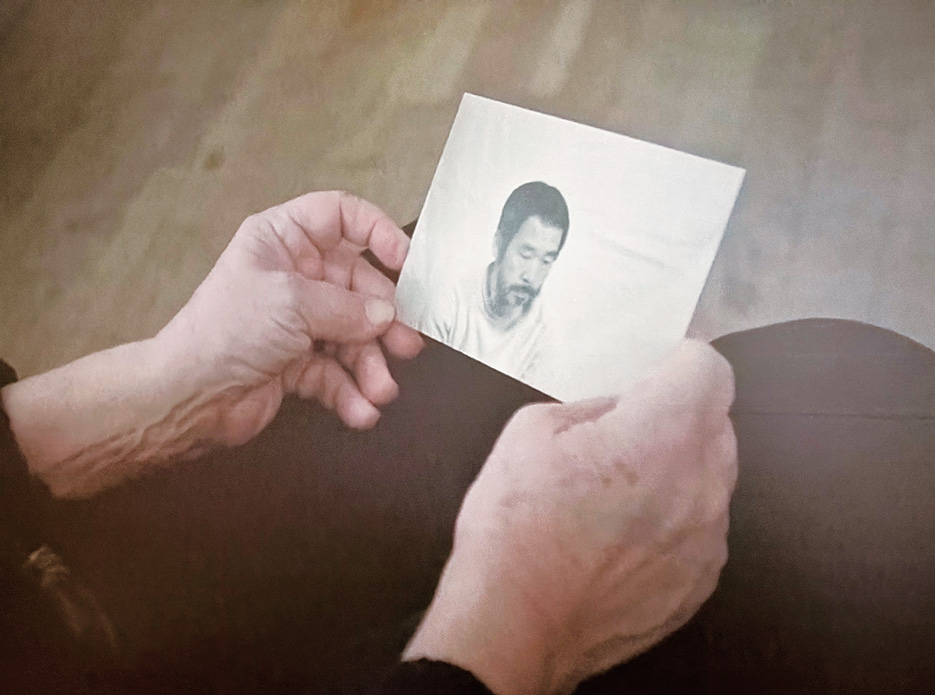
Scars–In front of the Paintings, War Is No Longer in the Past
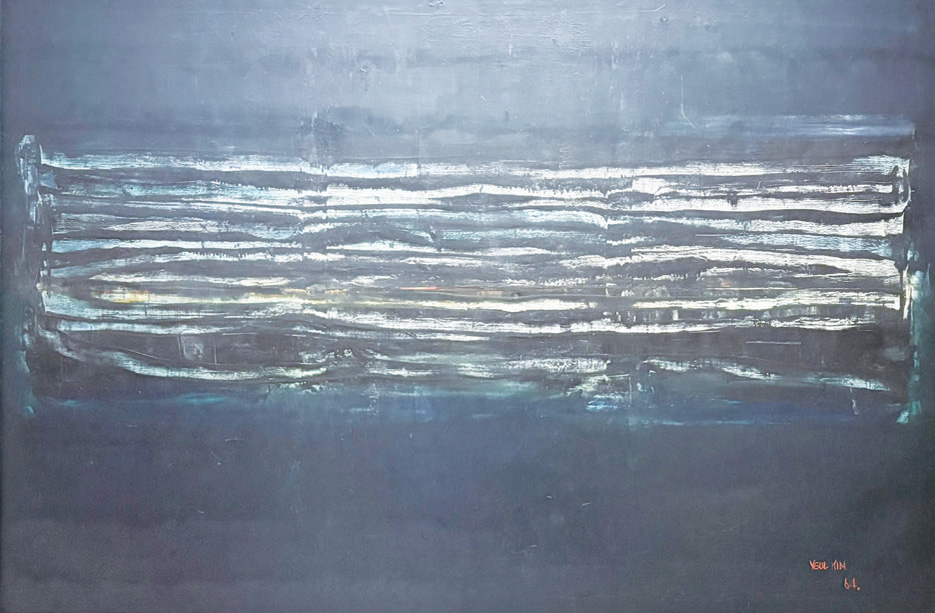
In the first chapter, “Scars,” a CBT reporter is unable to move on for quite some time. It is hard to take one’s eyes off the sharp lines that look like scratched surfaces, the cracked and burst marks, and the edges that seem burned. The paintings do not directly say anything, but throughout the viewing, the CBT reporter feels a tightness in the throat. After reading that all of the works from this period share the title, the paintings start to look completely different. The scratched marks on the canvas begin to resemble epitaphs for those who died without names. The dark lines crossing the surface feel like the lifelong guilt carried by those who survived the war. While standing in front of these works, the word “war” is no longer just a noun in a history textbook. To the CBT reporter, it rushes in like a scar that continues in the present tense.
Phenomenon–From Rough Emotion to Structure, like Taking a Breath
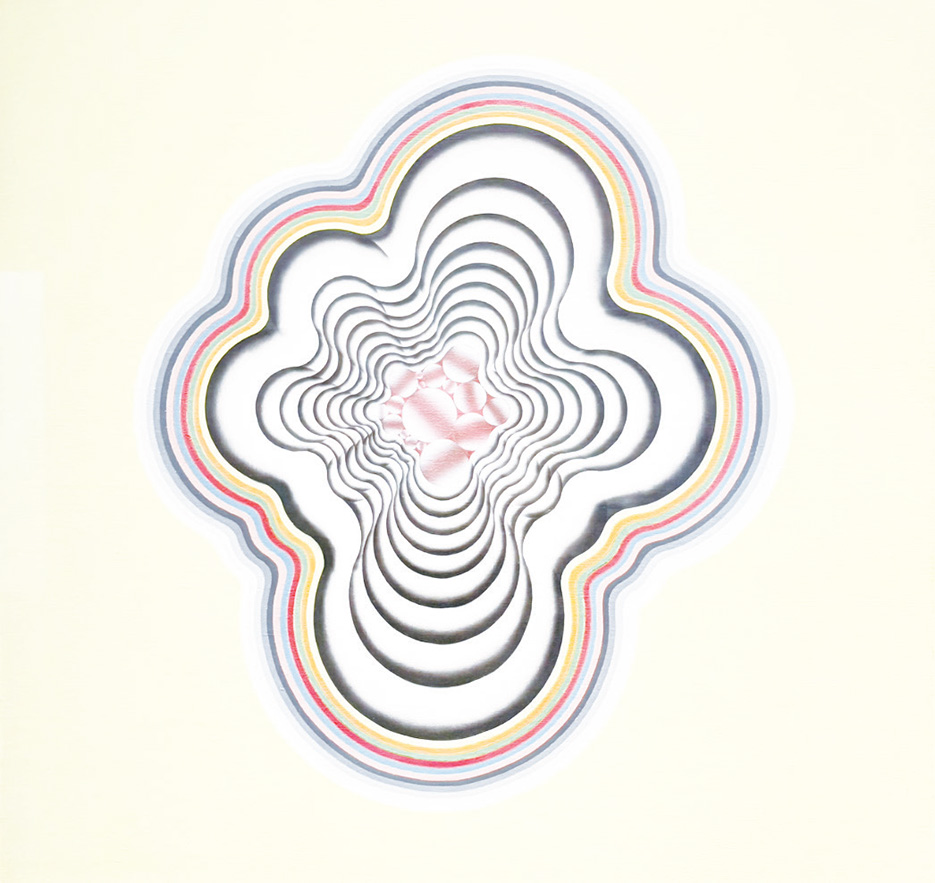
The second chapter, “Phenomenon” has a completely different temperature. Here, the surfaces look much more controlled, and geometric compositions based on circles immediately stand out. At first, the CBT reporter honestly wonders, “Why suddenly all these circles?” However, after seeing the studies placed among the finished works—drawings where the same circular form is repeated again and again—the CBT reporter’s thought change. It is not improvisation, but long and difficult experimentation and persistence in order to find a single form. This chapter feels like a pause where one steps away for a moment from the sharp, rough emotions of war. It shows a person trying to hold on to form and structure, and struggling hard to find a place to stand, as a preparation process that slowly moves toward the water drop paintings. As the reporter walks through the exhibition, the understanding unfolds not just intellectually but viscerally, felt through the entire body.
Water Drops–Not Just Pretty Images, but Wounds in a New Form
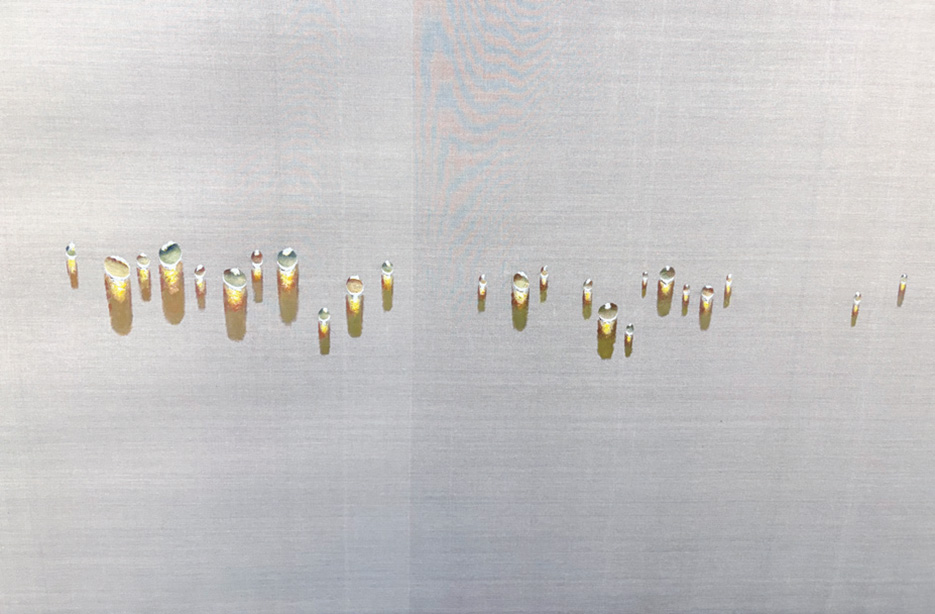
In the third chapter, “Water Drops,” the CBT reporter finally encounters the famous motif. The water drops, previously seen only in photographs, had seemed like precise and beautiful images. After walking through the first two chapters, they now feel like controlled sadness itself. In a space staged like a dark room, a large painting of a water drop floats quietly. The water drop, shining on a bright background, looks clean and transparent. However, inside it, the CBT reporter still sees the torn surfaces and scratched marks from the earlier works. The CBT reporter feels that memories of war and division, migration and everyday survival, and an endless sense of guilt are no longer shown as direct wounds. Instead, they seem to have been transformed and condensed into a single drop of water. Following the exhibition route, the number of water drops slowly increases, and their positions move from the center to the edges of the canvas. Strangely, none of the drops feels artificially “placed.” It is as if the artist stared at the canvas for a long time, and every time he felt, “It has to be there,” a water drop quietly formed in that exact spot.
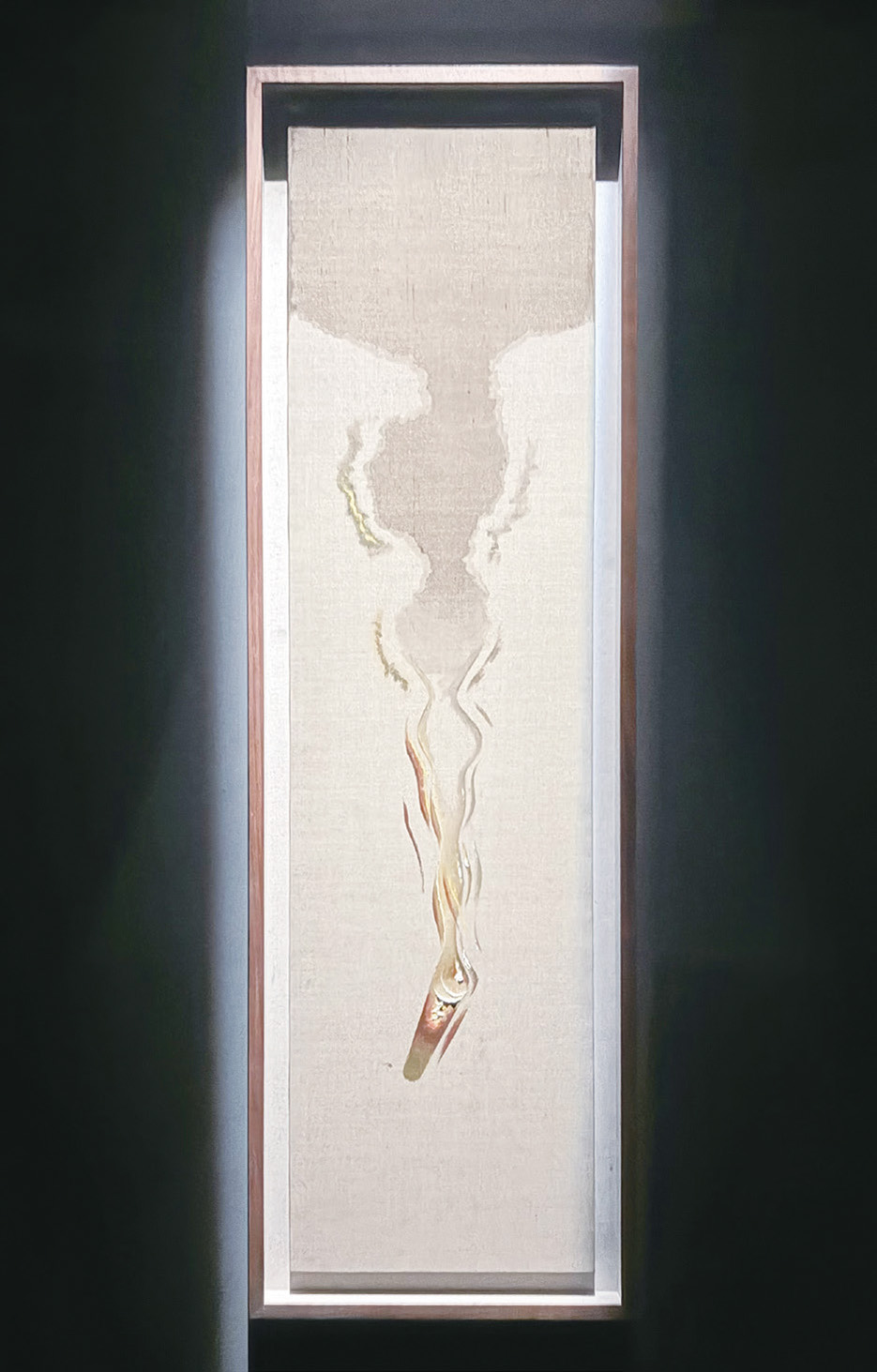
Recurrence–Last Water Drops on the Letters of Childhood
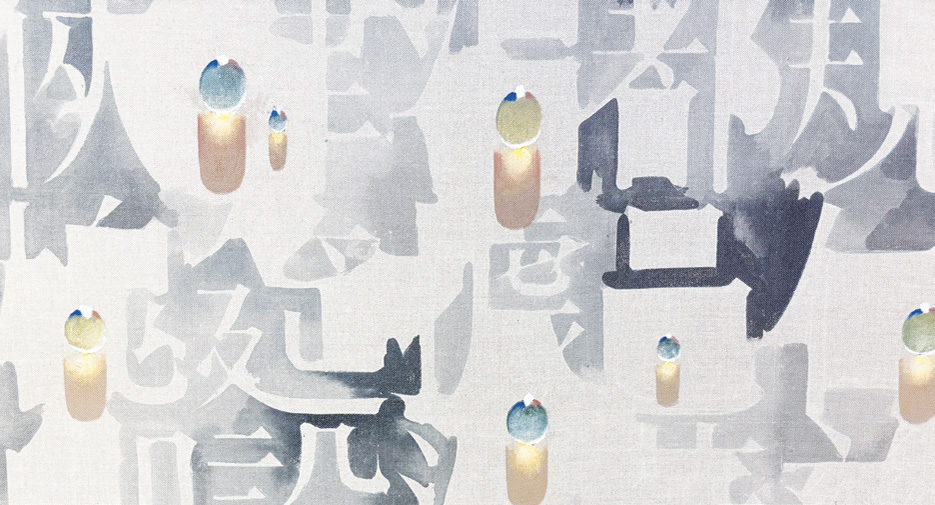
In the last chapter, “Recurrence,” the most impressive works for the CBT reporter are two large paintings where water drops are placed on surfaces densely filled with characters from the Thousand-Character Classic and other Chinese characters. The letters that he memorized and copied as a child, and the water drops of all his life, are written all over the painting. It feels like a moment when “the beginning and the end become one.” War, migration, long years in foreign countries, and then the return to the letters of childhood—on top of all this, the water drops no longer look like the violent wounds of his youth. Instead, they look like the expression of a person who calmly accepts everything that has happened.
In the archive space on the second floor, “Monsieur Gouttes, Kim Tschang-yeul,” the CBT reporter sees photographs of his studio, notes, exhibition posters, and letters. These materials bring the human Kim Tschang-yeul, who stood behind the name “water drop painter,” much closer.
Why Kim Tschang-yeul Today? –Thoughts While Leaving the Exhibition
In the retrospective Kim Tschang-yeul at MMCA, it feels like an experience of slowly walking alongside one person’s life, seeing the wounds of an era and the ways he tried to endure them.
Nowadays, violence, disasters, and hateful language are consumed too easily, and people live in a time when new scars are constantly being made. In this reality, Kim Tschang-yeul’s water drops do not seem like a way to erase pain. Rather, they look like one possible answer to the question of how to keep living while still carrying that pain.
When looking at Kim Tschang-yeul’s water drops, the CBT reporter feels that darkness and light, pain and rest, giving up and holding on all seem to exist together inside them. This exhibition asks visitors how they face the wounds they receive in life, and how they handle them. The retrospective Kim Tschang-yeul would not give a clear correct answer to this question.
However, by showing the water drops that one person painted over a whole lifetime, it quietly suggests that each of us might find our own water drop, our own pause or “comma” in life. As the CBT reporter leaves the exhibition, it feels as if a small water drop has quietly formed in one corner of the heart. Thanks to that water drop, future scars may feel just a little less frightening.
By Choi Yun-ji
cjyyuyu@chungbuk.ac.kr


 Quick News