최종편집 : 2026.10.19 월 17:57
  All
All Society & Global


 Kim I-heon
From Asia to Africa and South America, anti-government protests led by Gen Z are spreading simultaneously across the globe, even triggering regime changes. Gen Z, born between the mid-1990s and the early 2010s, are often described as Digital Natives who grew up in a digital environment. They use social media platforms like Discord, TikTok, and Instagram as tools to organize protests. According to an analysis by Modern Diplomacy, experts view these movements as a more evolved form of resistance than Occupy Wall Street, the 2011 protest against economic inequality, or the Arab Spring, the wave of pro-democracy uprisings across the Middle East in the early 2010s.
Asia: Youth Fury Against Privilege
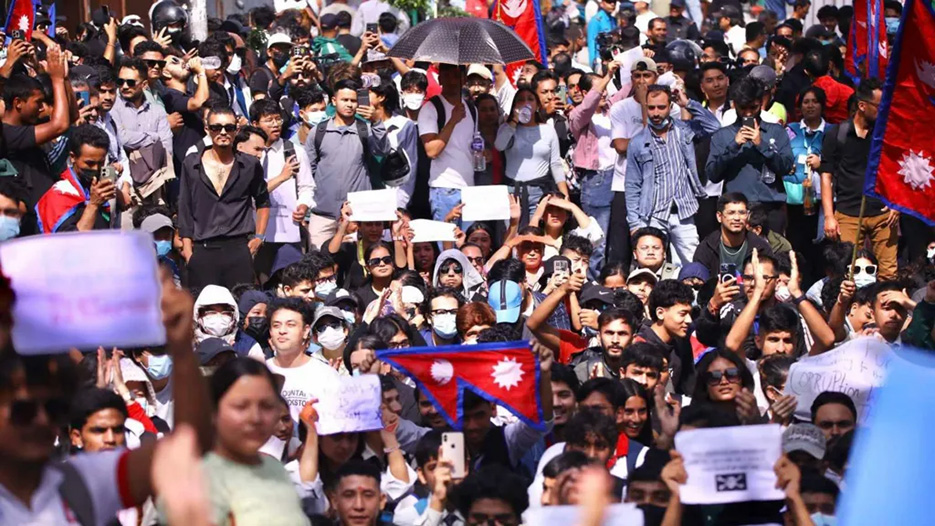
In Nepal, the anger of youth toward government corruption has led to a change in regime. The protests were triggered in Sept. by the government’s move to block social media access, but their deeper cause lay in the corruption of the vested interests. According to Transparency International (TI), a corruption watchdog, Nepal ranks 107th out of 180 countries in the Corruption Perceptions Index. In particular, the children of the privileged class, known as Nepo Kids, fueled youth anger by flaunting luxury goods and lavish lifestyles on social media. According to the 4th Nepal Living Standards Survey published by the National Statistics Office of Nepal in 2023, more than 20% of Nepal’s population lives in poverty, and the youth unemployment rate exceeds 20% as of 2024. After fierce protests resulted in 72 deaths, Prime Minister K.P. Sharma Oli announced his resignation, and four cabinet ministers also stepped down.
This backlash against privilege also spread to Indonesia and East Timor. In Indonesia, large-scale protests erupted after it was revealed that 580 lawmakers were paid a monthly housing allowance of 50 million IDR (about 4.3 million KRW). This amount was nearly 10 times the minimum wage in the capital, Jakarta, which is 5.4 million IDR. For youth, already suffering from high unemployment and tax hikes, these perks for lawmakers became the decisive factor that stirred public opinion. Eventually, the government abolished the housing allowance and replaced some cabinet members. In East Timor, protests broke out as about 2,000 university students opposed a budget of 4.2 million USD (about 5.8 billion KRW) to provide new SUV for 65 members of the national parliament. The plan to provide new cars was subsequently scrapped.
ⓒBBC
Africa: Youth Crying Out for Survival
Last Oct., a political crisis was triggered in Madagascar, East Africa, as protests over water and electricity shortages intensified. As the demonstrations escalated, President Andry Rajoelina fled to the United Arab Emirates on Oct. 12, and the parliament voted to impeach him on Oct. 14. This marks the first time the Malagasy parliament has passed a presidential impeachment motion since the country’s independence from France in 1960.
Around the same time, large-scale protests spread in Morocco demanding improvements in healthcare and the education system. Protesters organized demonstrations through a channel called Gen Z 212 on the gaming chat platform, Discord. 212 is Morocco’s country calling code, which the youth adopted as part of their identity. According to BBC, protesters criticized the government for pouring budget funds into preparations for the 2030 World Cup with the slogan, “Stadiums are here, but where are the hospitals?”
South America: Demanding an End to Corruption
In South America, youth dissatisfaction is also spilling onto the streets. In Peru, protests are continuing against pension law reforms, rising insecurity, and corruption. In Paraguay, youth chanted the slogan “We are the 99.9%,” demanding an end to political corruption and greater transparency in the national budget. This slogan is a variation of “We are the 99%” from the 2011 Occupy Wall Street protests in the U.S., symbolizing the resistance of the majority of the people (99%) against the wealthy minority (top 1%).
What Makes Gen Z Protests Different?
These Gen Z protests show distinct differences from past movements.
First is voluntary organization through social media. According to The New York Times, 145,000 people gathered on a Discord server in Nepal to directly select an interim prime minister candidate through a vote. Youth are acting on their own without the leadership of specific political parties or labor unions.
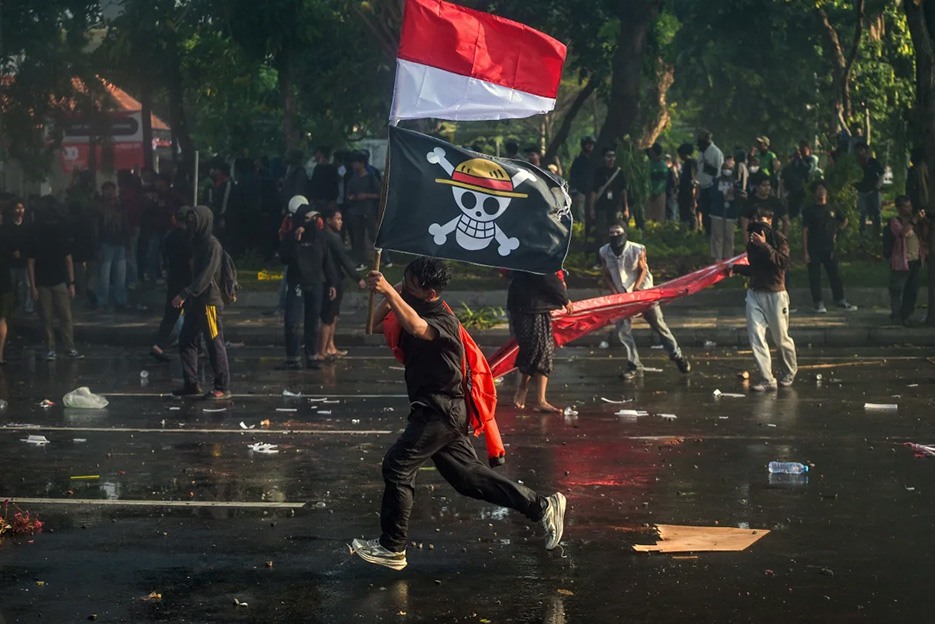
Second is cross-border solidarity. The pirate flag from the Japanese manga, One Piece, commonly appears at protest sites. The story of the protagonist seeking freedom against authority has become a symbol connecting youth around the world.
Third is the chain reaction of protests. According to a report by India Today, a participant in the Nepal protests said they were inspired by protests in Bangladesh and Sri Lanka. Protest information shared in real-time via social media is inspiring youth in other countries, and experts are also paying attention to these movements. The New York Times analyzed that “Recent Gen Z protests are a resistance by youth against economic inequality, the corruption of vested interests, and high unemployment,” adding that “It clearly shows what role social media can play, especially against a political sphere that has lost trust.”
ⓒCNN
By Kim I-heon
huni25@chungbuk.ac.kr


 Quick News