최종편집 : 2026.09.07 월 19:58
  All
All Culture


 Kweon Sol-min

Perfect Day VS Just an Ordinary Day
Among Korea’s MZ generation, two seemingly contradictory lifestyle keywords have risen to prominence, “Godsaeng” (a meticulously structured and productivity-driven lifestyle) and “Aboha,” short for “aju botong-ui haru,” meaning a very ordinary day. While Godsaeng celebrates disciplined routines and constant self-improvement, Aboha embraces the comfort of an unremarkable and restful day. Interestingly, these two attitudes do not negate each other; rather, they coexist within the same generation— reflecting a landscape where some prioritize constant striving while others cherish the freedom of not burning out.
Godsaeng—Self-assurance Built Through Routine
At the heart of Godsaeng lies routine and efficiency. Students plan their days down to the minute—wake-up times, study blocks, gym sessions—structuring their lives according to detailed schedules. Morning-routine challenges and study-room check-ins frequently circulate on social media, where users post their daily routines and motivate one another. This culture extends beyond simple self-development; it becomes a way of reaffirming one’s sense of control and self-worth. Amid a culture of constant comparison and growing uncertainty, the feeling of having lived a perfectly structured day within one’s own rules can provide deep comfort. However the pressure to maintain this perfection often leads to fatigue.
Yoon Da-hyun (Dept. of International Business, 23) shared, “I always wish to live more like an Aboha, but in reality, I am constantly managing a packed schedule. I try to make the most of every day, but when I hit my physical limit, I sometimes wonder what I am pushing myself for.”
As the head of CBNU’s cheerleading team Neulhaerang, she balances major coursework, team leadership, and practice—filling her days to the brim. “I am not a morning person,” she said. “I have a 9 a.m. lecture, so I usually wake up at around 8. The first thing I do is check today’s schedule on my notes app, then wash up, grab a quick bite, and rush to school. I try to minimize any wasted time.” Her daytime hours are spent attending major classes and organizing assignments during short breaks. Evenings are dominated by cheerleading practice.
“We start around 6 p.m. and often practice until 10 p.m., sometimes midnight. I manage the team’s schedule, check choreography, and support new members. I rarely have a moment in the day that is truly mine.”
Her weekends are no different—filled with part-time work. After a long shift, she organizes her planner again because leaving the week unplanned makes her anxious.
When asked if she has experienced burnout, she replied, “Even when it gets overwhelming, I cannot delay my tasks because the team moves only when I do.”
Despite the polished image often associated with Godsaeng routines, her reality is fast-paced and burdensome. Still, she believes that consistently doing what needs to be done grounds her life and gives her a sense of pride.
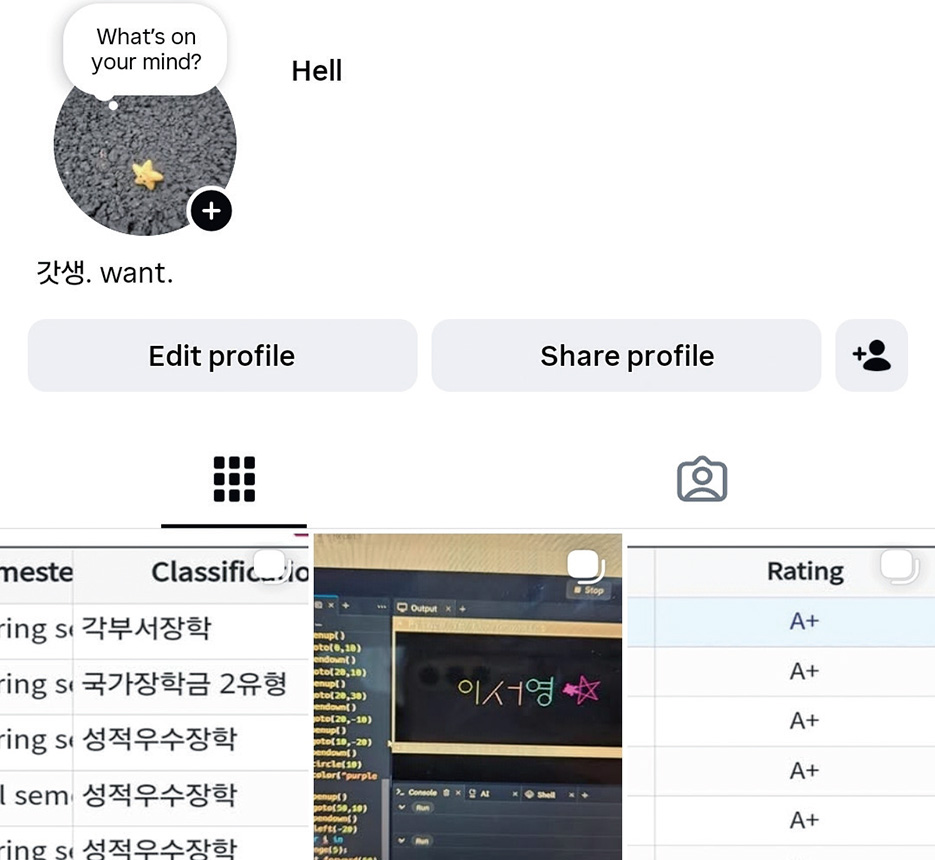
Aboha—Finding Comfort in the Ordinary
Aboha, meaning a very ordinary day, stands on the opposite end of the spectrum. If Godsaeng is fueled by a desire to live intensely, Aboha conveys the idea that one’s energy—and peace—come from slowing down and spending time alone. On social media, posts like “I slept all day,” or “Today’s tasks will be handled by tomorrow’s me,” draw sympathy from countless peers who have also burned out from trying too hard. For a generation unaccustomed to resting, Aboha becomes a gentle reminder that stopping is also a form of recovery.

Jung Do-hyeon (Dept. of International Business, 22) says, “I try to find happiness in small things. If you pursue a Godsaeng lifestyle all the time, you can burn out easily. I prefer a slow and ordinary routine. I have tried to live intensely like others, but ultimately, a steady and quiet rhythm suits me best.” He describes his day as “Nothing special, and that is exactly why it is comforting.” He avoids rigid routines and adjusts his day based on how he feels. “If class starts at 10 a.m., I get up at 9 a.m.. If class is at 2 p.m., I eat lunch and head out slowly. I do not plan my mornings too strictly—I move according to my condition.” Between classes, he returns to his dorm to rest or simply listens to music while lying down. “Everyone seems so busy squeezing activities into their day, but taking a short break helps me focus better and feel calmer. If I have extra time, I enjoy going to a café with friends. Sharing small stories becomes a big source of comfort. It does not need to be productive.”
Sunbathing on a bench, sitting on the grass, taking quiet walks—these simple moments make up his version of Aboha. He often posts casual café or sky photos on social media, which he describes as entries in a calm, personal diary. Although he occasionally compares himself to friends who follow strict routines, he ultimately finds his own pace the most sustainable. He says, planning the day too tightly leads to quick exhaustion. Instead, he does what he can do each day and leaves the rest for tomorrow.
A similar concept can be found in Slow Living, a lifestyle philosophy derived from the Slow Food movement that began in Italy in the 1980s. Slow Living promotes a “slow-paced life,” encouraging individuals to align the overall speed of their lives with a more natural rhythm, prioritizing both mental and physical well-being. It emphasizes mindfulness and advocates for a sustainable, long-term approach to daily living. The growing popularity of lifestyle practices centered on “intentional rest,” such as today’s Aboha culture, reflects this same underlying philosophy.
Finding One’s Own Pace
At first glance, the two students’ lifestyles seem worlds apart. However both start from the same question; What pace feels most sustainable and true to me? Godsaeng builds resilience through achievement, while Aboha protects mental space by slowing down. Neither lifestyle is more correct or mature than the other. How they live is not something to be decided by others but crafted by observing themselves closely and adjusting their rhythms accordingly.
By Kweon Sol-min
thfals7958@chungbuk.ac.kr


 Quick News